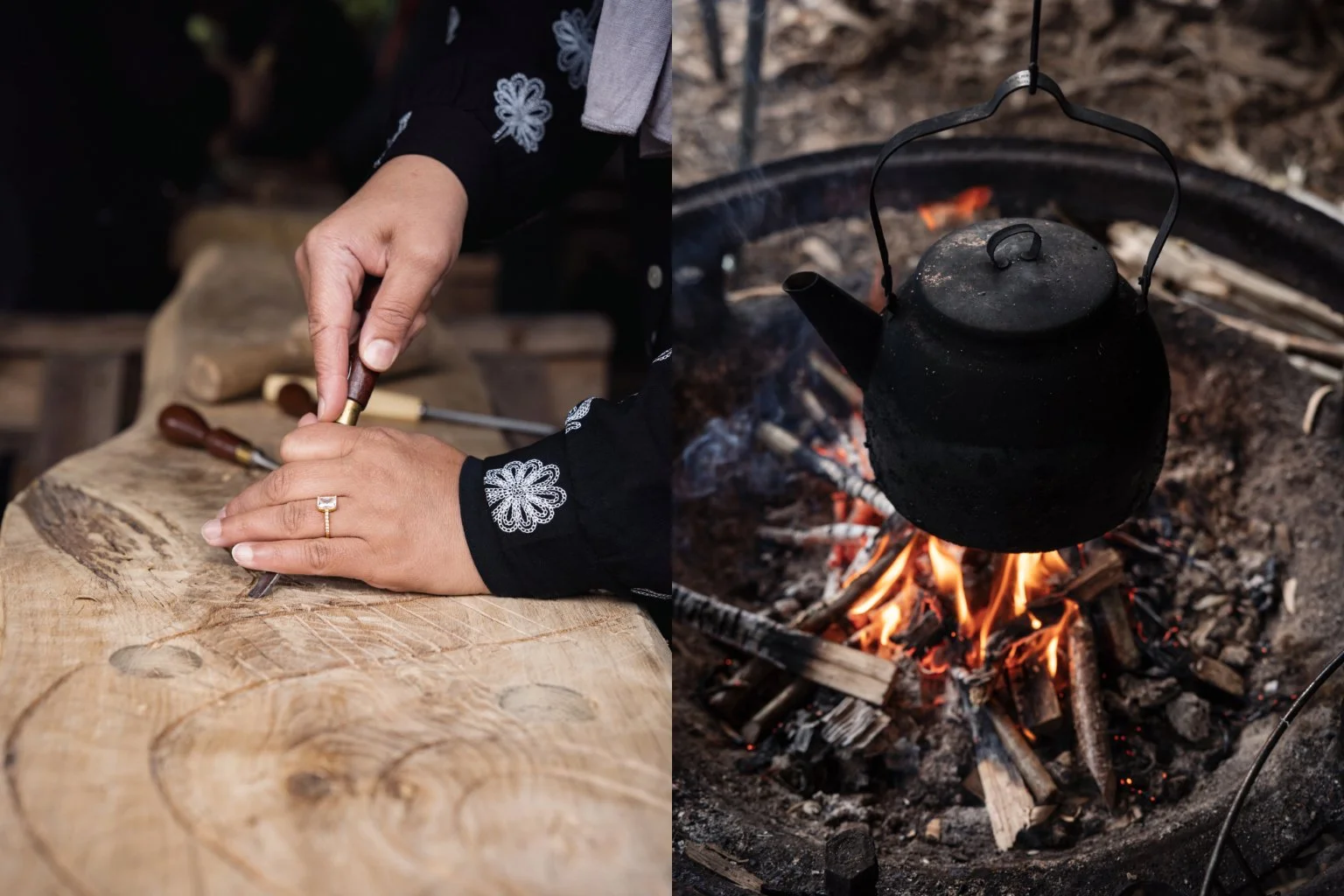
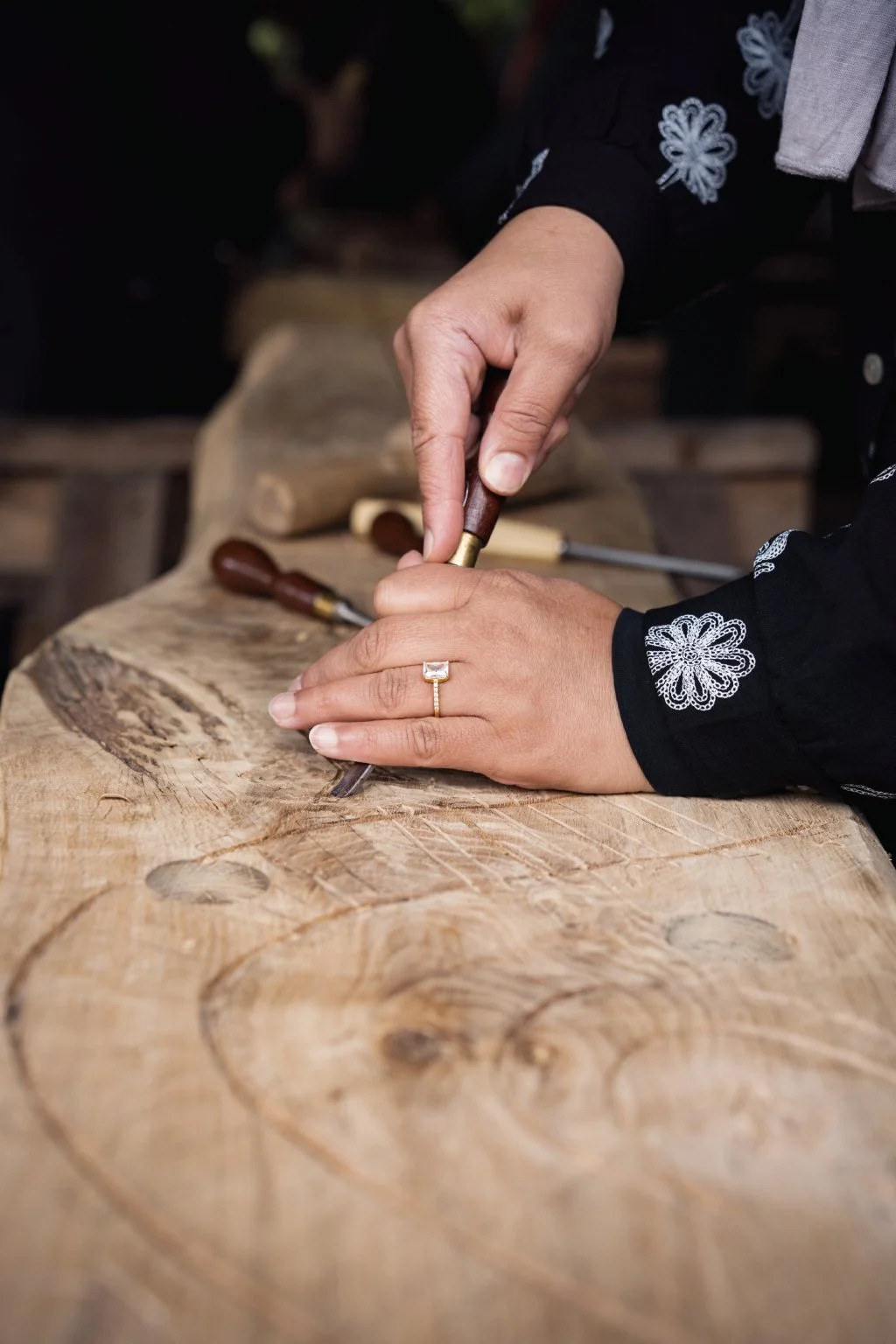
It’s wonderful how quickly folks can pick up green woodworking techniques, given the right context. When we started the Carving Connections project in early September last year, most, if not all of the participants, had never held a chisel. Some were even hesitant to wield a pencil, perhaps, like many, they were told at school that they were “no good at art”. Yet by the end of the five carving sessions, Coppice Co-op staff were being (very politely) elbowed out of the way in the enthusiasm to locate a stretch of wood, conceive and draw designs, and carve them with fluency.
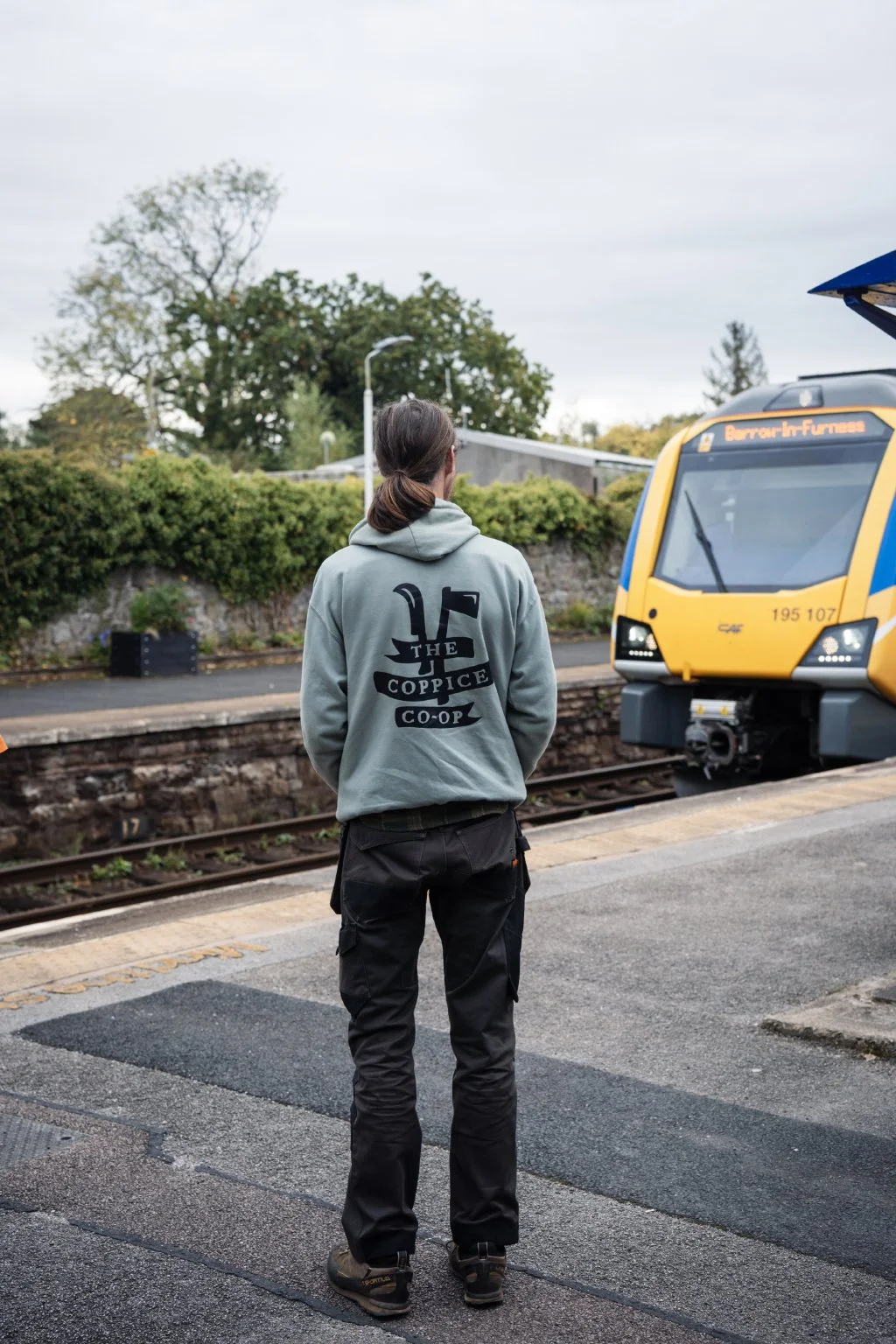
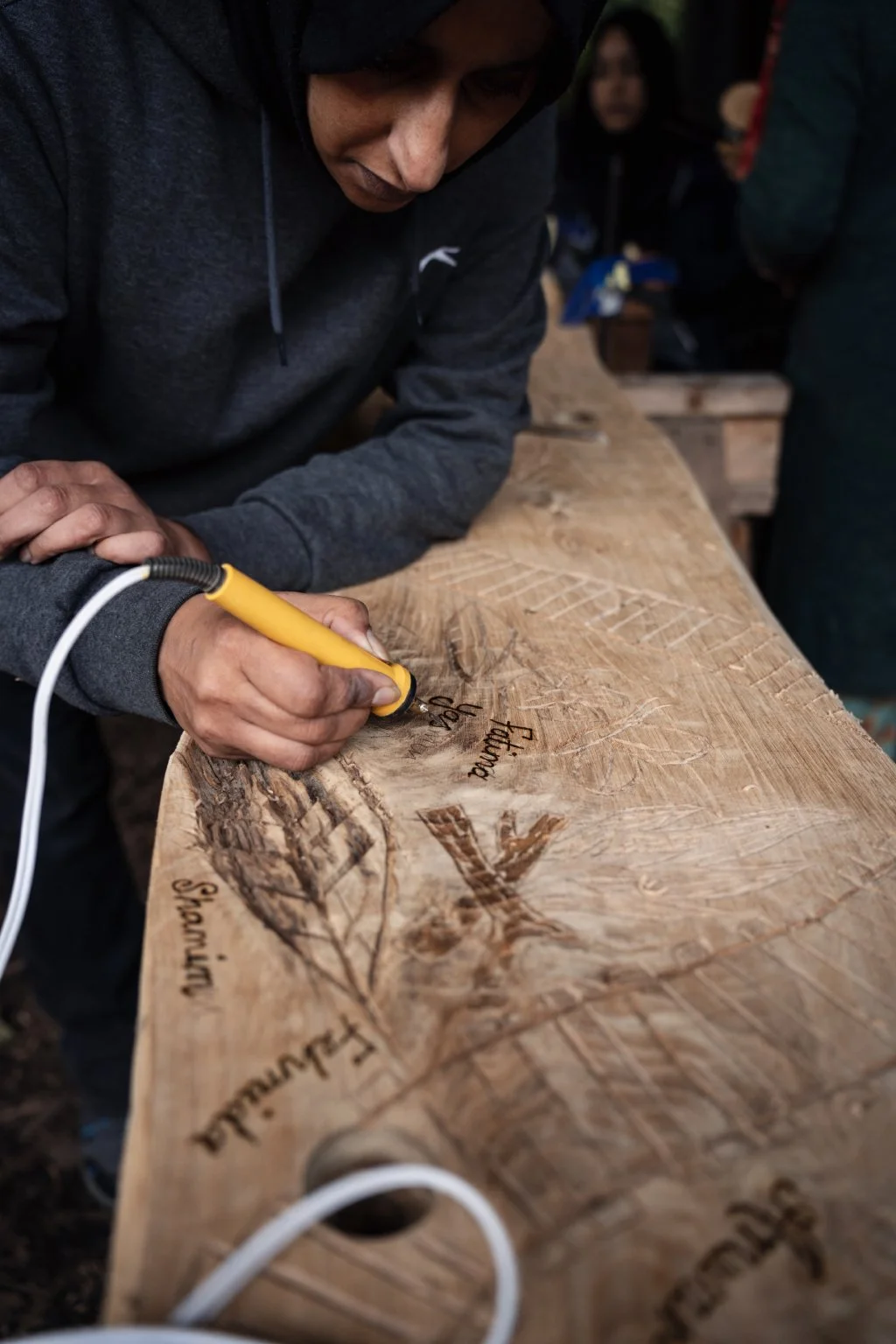
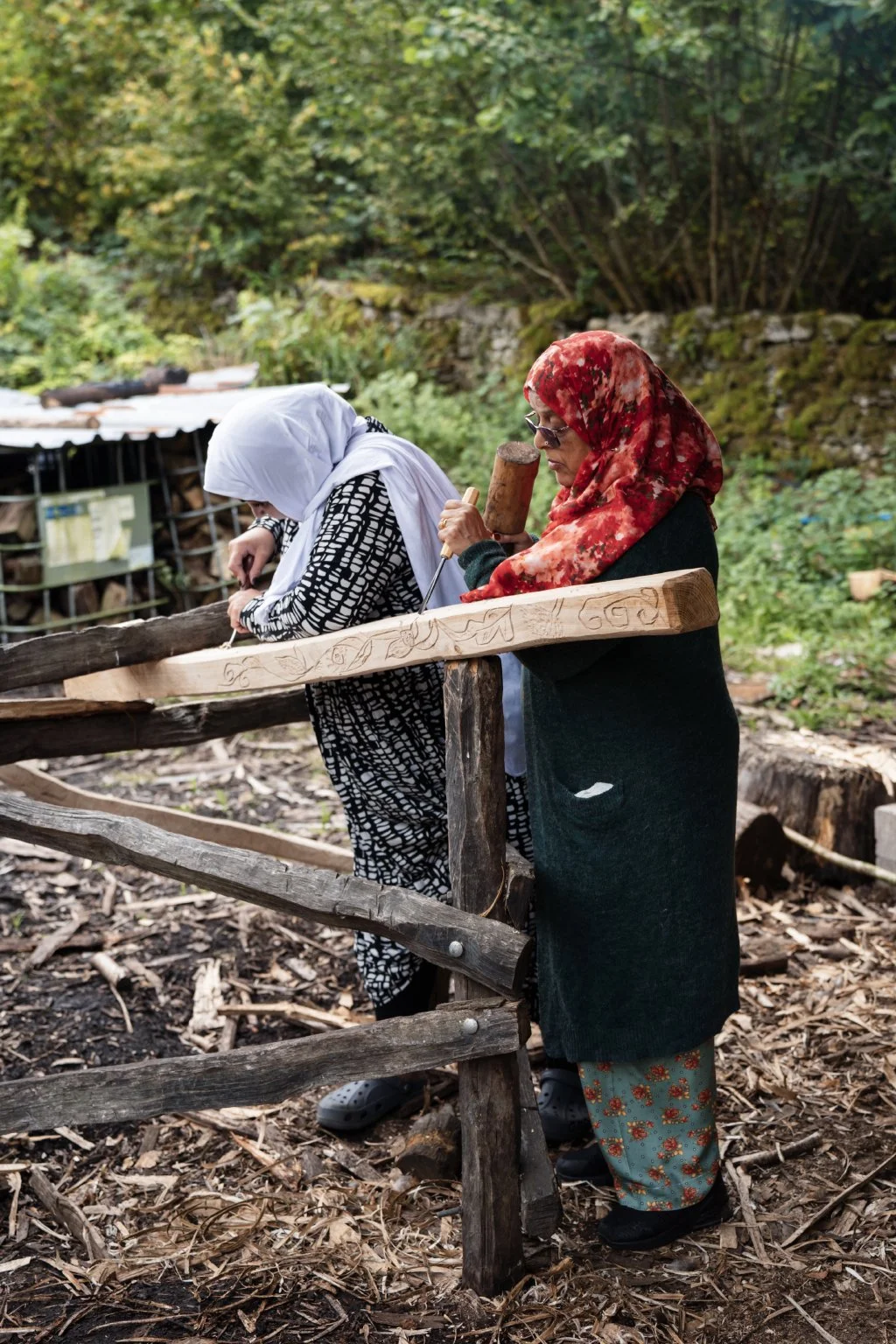
To be fair, the project did benefit greatly from the comfortable familiarity that had been developed the previous year between between participants and The Coppice Co-op (a workers co-operative specialising in traditional woodland management and crafts). Stations of Welcome is a station adoption group based in Accrington and comprising of British women mostly of South East Asian origin. Members of the group had travelled to Silverdale by train in the autumn of 2024 to join a woodland engagement project developed by the Coppice Co-op through the Farming in Protected Landscapes fund. The emphasis of the first set of sessions was to increase comfort levels and ease of access to the woodlands of the Arnside and Silverdale National Landscape, as well as furthering understanding of woodland management and green woodworking tools and techniques. Carving Connections was funded mostly by the Nature Connects Fund. It was very much built on what was achieved previously but the emphasis this time around was on exploring creativity and art through connection with landscape.
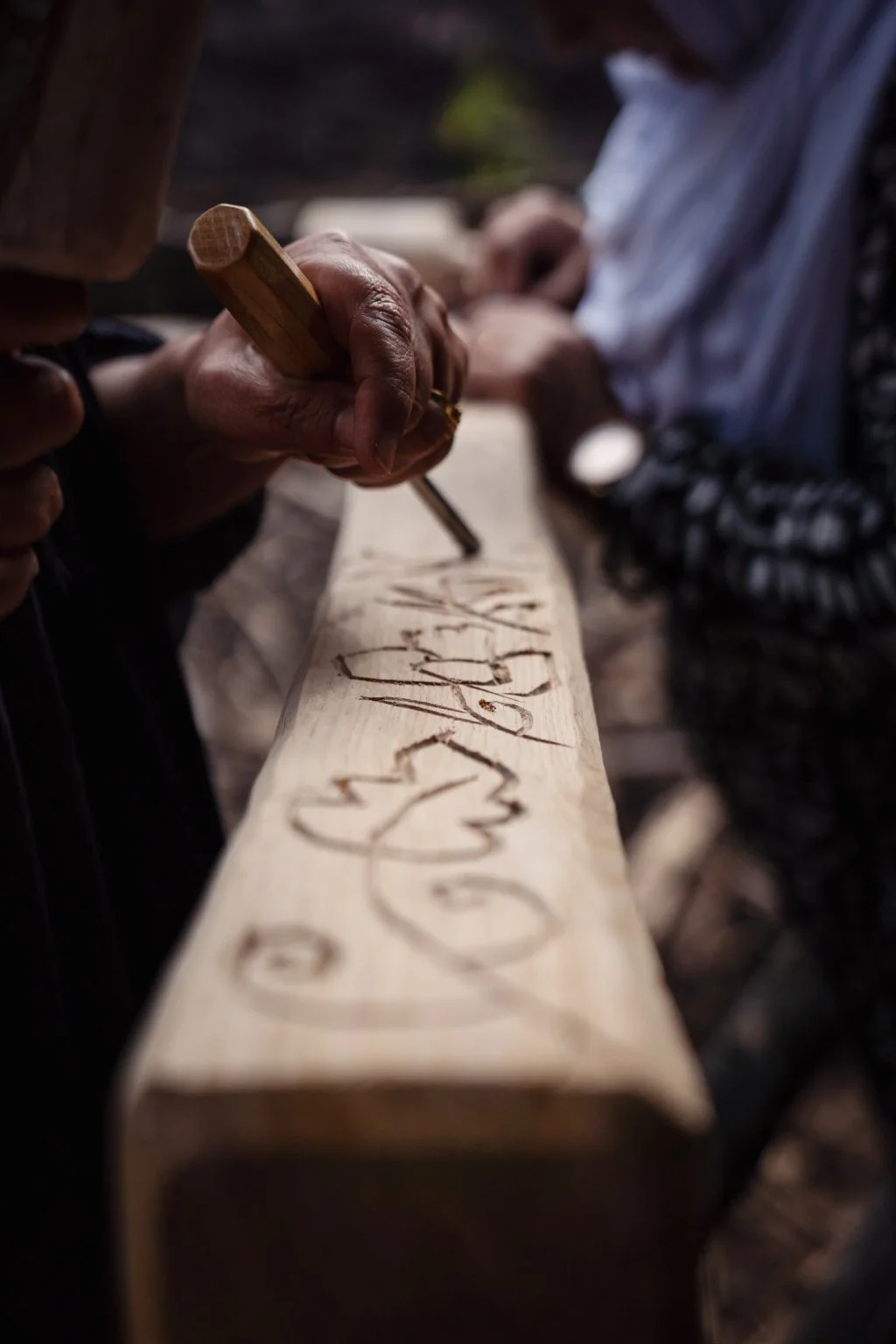
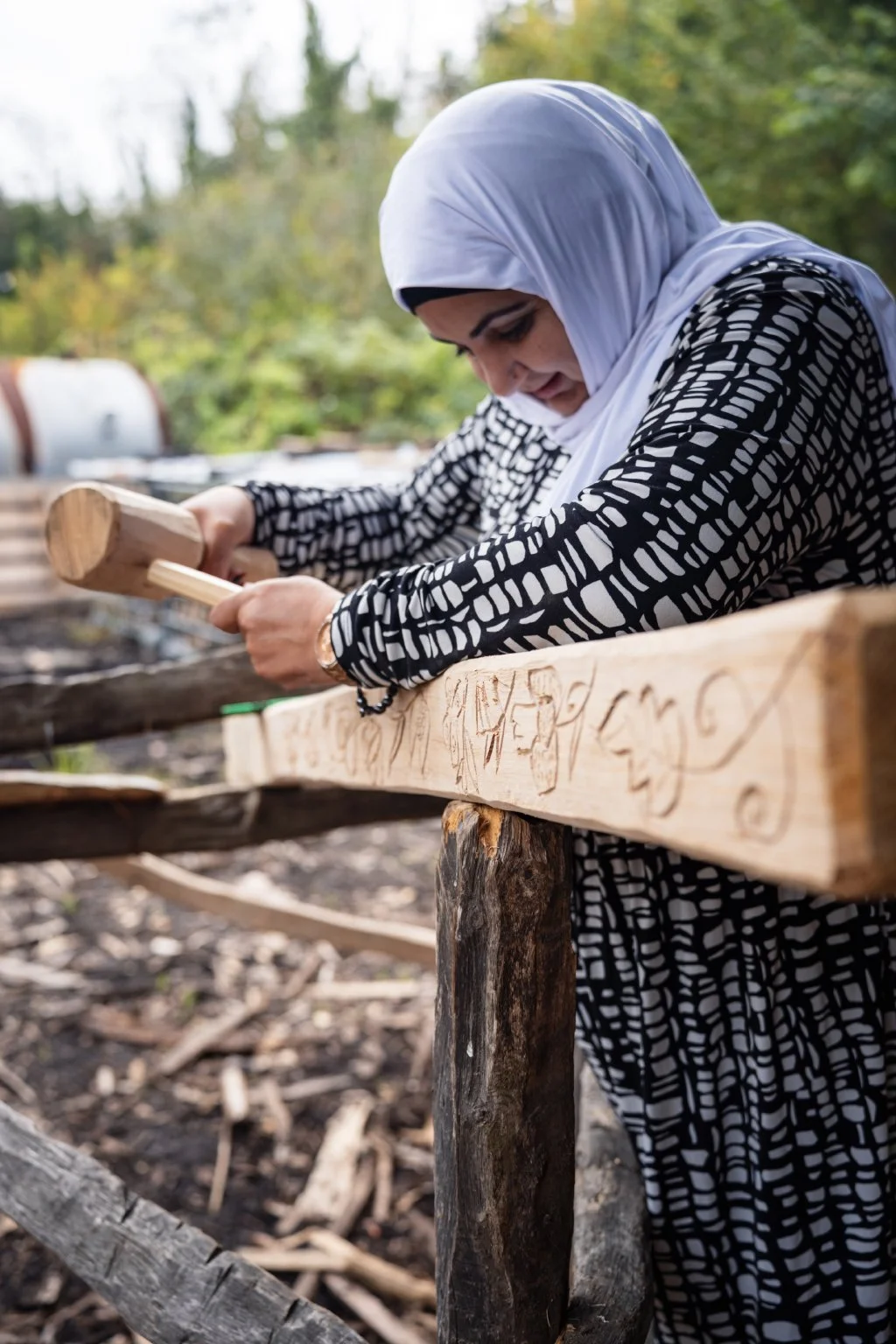
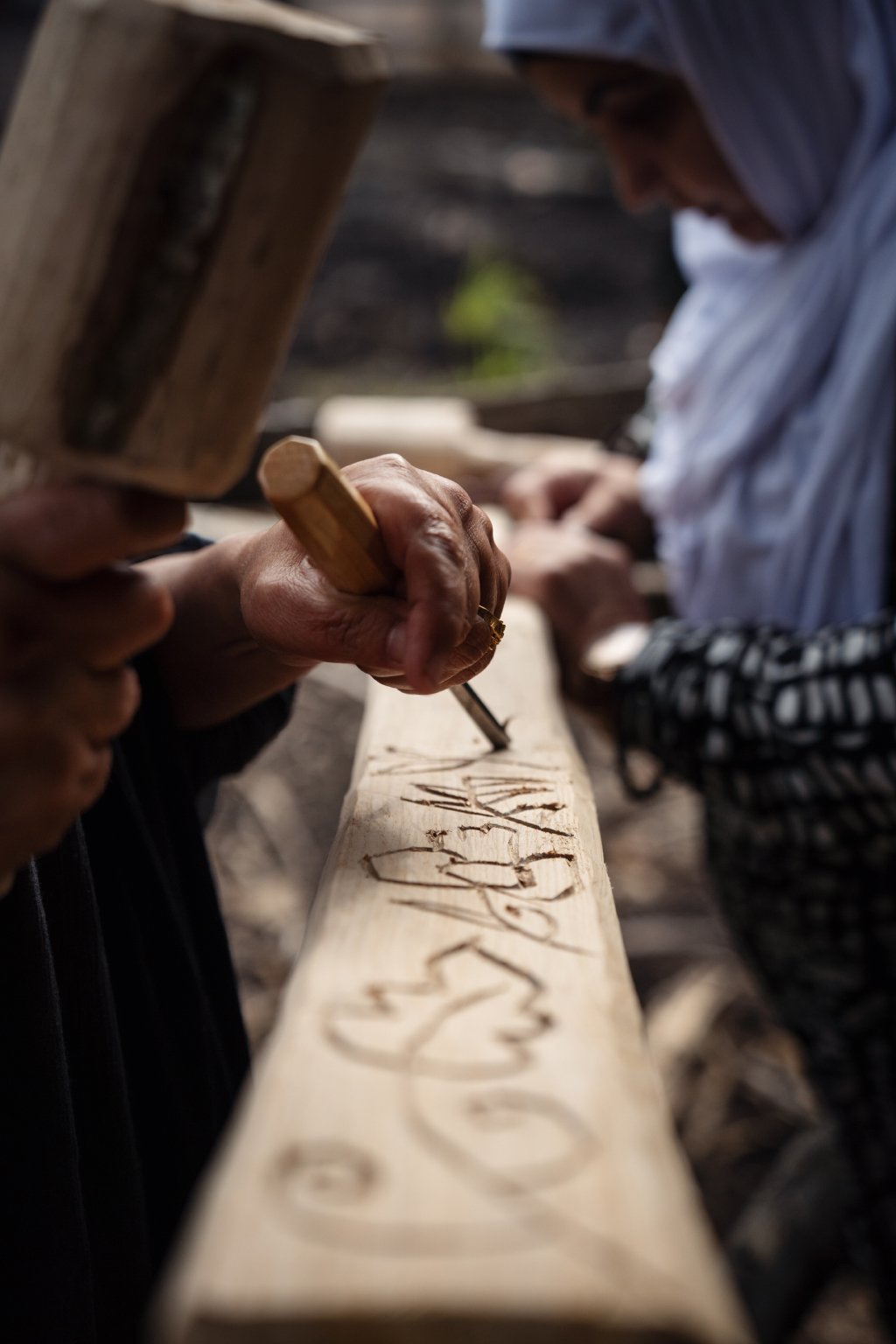
Although members of the Coppice Co-op have been known on occasion to “do an art”… we were extremely pleased to have Miranda Prag (director of Mainspring Arts) on board to help support the artistic process and encourage participants’ creativity and expression. Creative juices had been fermenting since earlier in the year when Miranda and the Coppice Co-op hosted a design and development session with Stations of Welcome, using a variety of materials to craft bench designs and sketch out ideas, and having a taster on the wood carving chisels. This meant that when we started the main body of sessions (one day a week through September and early October) we were able to hit the ground running. The days were lighthearted and fun – plenty of cups of tea, shared food around the fire, and interesting conversation – but nonetheless the group approached the tasks with commitment, a willingness to explore ideas and to learn, and a determination to see a pair of beautiful benches emerge as the end product.
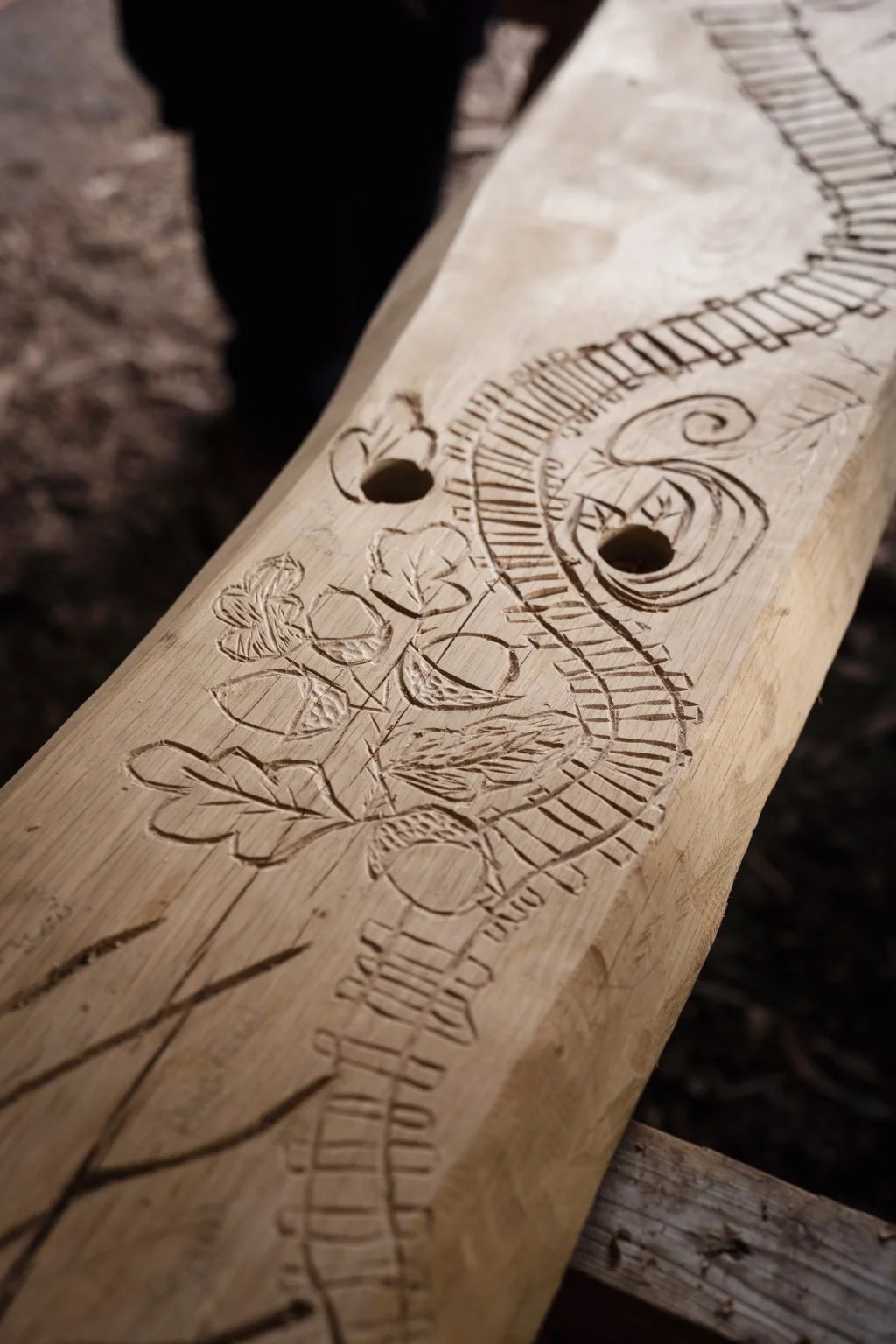
The idea of connections ran throughout the project and helped to formulate its shape. Through a design and development process we decided to carve a pair of “twinned” benches, one for the Stations of Welcome community garden at Accrington station, and one for Coldwell meadow nature reserve in Silverdale. The bench backs were carved side by side, with a train track winding across both and recurring motifs of bitterns, acorns (Accrington’s symbol), plants, flowers, mosques and campfires. We hope that the benches serve as a lasting symbol of connection between our communities.
As a further expression of connection the final day was a celebration of what we had achieved. Stations of Welcome travelled up to see the Coldwell bench in situ and a had a walk into Gait Barrows National Nature Reserve to see the handrail that was also built and carved as part of the project. Then a bunch of folks from up here jumped on the train to visit the bench in Accrington and meet other members of Stations of Welcome’s extended community. Community Rail Lancashire were instrumental to both projects, contributing funds and free rail travel for participants – resulting in some very sociable train rides where the whole carriage was invited to share food and join in with the fun!
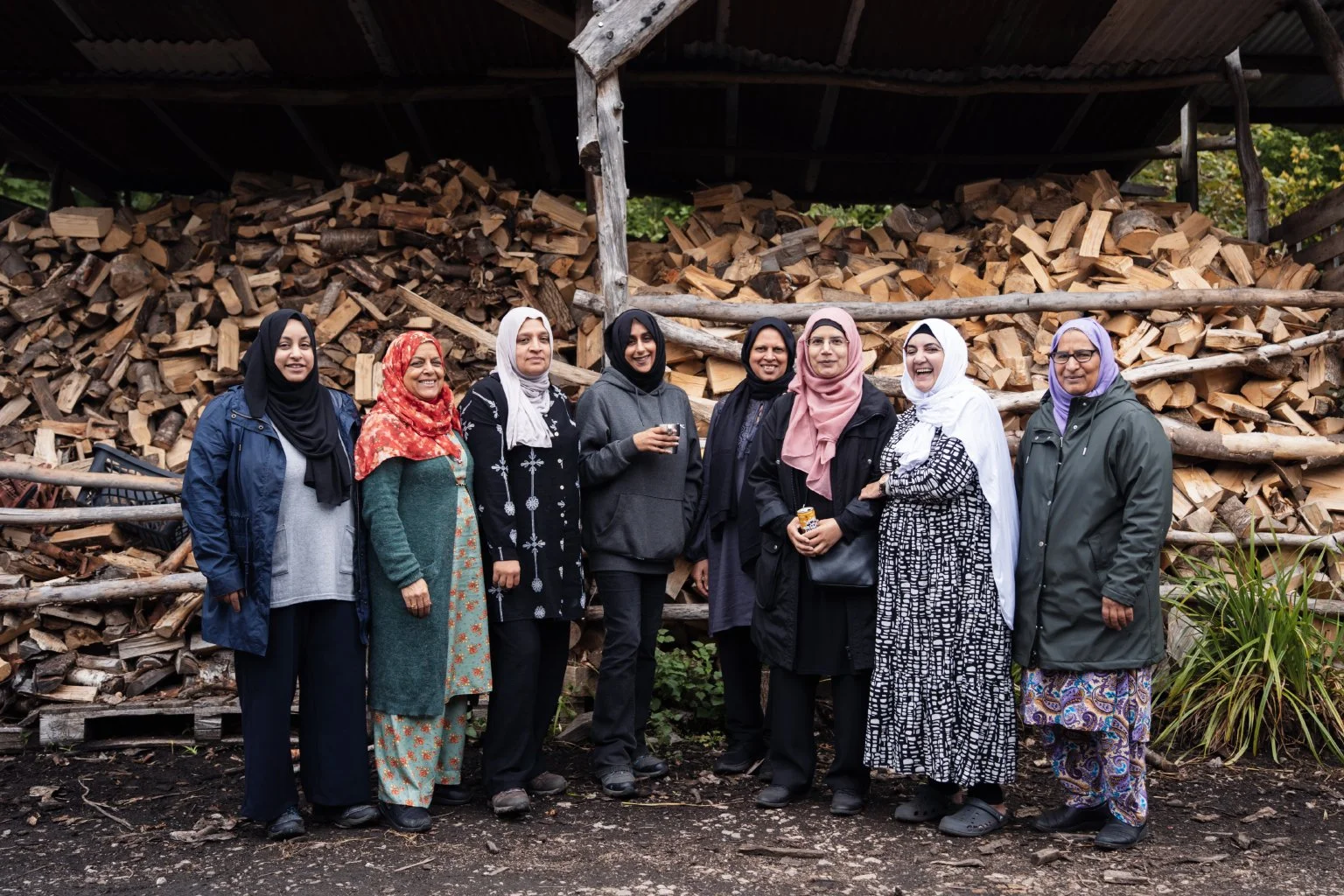
Listening to the light tap of mallets on chisels and watching the tools chase around curving lines of wood grain is extremely satisfying - and a good reminder that artistic processes can connect us to our environment in meaningful ways. It’s also been great to explore how creativity and landscape can be further used to forge links between people and communities – to carve connections.
Words by Sam Ansel
Photography by Andrew Groves